
The Down syndrome conversation we should be having
/
OPINION
After YouTuber Jesse Ridgway announced he and his wife terminated a pregnancy because of a Down syndrome diagnosis, I found myself thinking about the love and joy that often go unmentioned.
By Beverly Beckham Globe Correspondent
Years ago, when I was a young mother with three healthy children, I met a woman in a dressing room at South Shore Plaza who told me her daughter had recently died, a daughter who had been healthy for all of her 14 years until the day she was diagnosed with inoperable cancer.
She had two daughters, she said. Her oldest had suffered a brain injury at birth, was cognitively impaired, and in a wheelchair. In my ignorance, I thought: This daughter, not the healthy one, should have been the one to die.
Names and dates have faded over the years. But this thought? I see it in neon. And it brings me such shame. But it also brings me understanding. Because people don’t know until they know, until they’ve lived it, that there’s more to human beings than their disability. The world puts the focus on all a person can’t do, while ignoring all a person can do.
Which leads me to Jesse Ridgway, the popular YouTuber who recently shared with his 4 million followers that he and his wife had chosen abortion over raising a child with Down syndrome.
“When I first confronted this news, I was shocked but optimistic,” he posted on X. “If they’re a little slow intellectually, then we’ll make it work. I signed on to be a parent, come what may … but I just didn’t fully understand what Down Syndrome entailed.” He listed a slew of potential medical issues that led the couple to choose an abortion.
When my granddaughter Lucy was born 23 years ago and diagnosed with Down syndrome, we got a short, verbal version of that harrowing list. The doctor told us that Lucy might not walk, she might not talk, she might be blind, she might be deaf, she might have heart disease, she might get leukemia.
Imagine a doctor walking into a hospital room, examining a typically healthy baby and declaring, “She’s healthy now, but she might die of crib death or she might get hit by a car or she might drown.”
I believe the Ridgways chose abortion because they were not given the whole picture. I wish they had talked to Dr. Brian Skotko, medical geneticist and Emma Campbell Endowed Chair on Down Syndrome at Mass General Hospital. As he tells new parents online: “Congratulations, you have a baby with Down syndrome. I can guarantee that this life journey will be one of amazement and full of joy.” I wish someone had told the Ridgways that people with Down syndrome come in all shapes and sizes and are as different as people without the genetic condition.
I’m certain there are strangers who look at my granddaughter and feel sorry for her and for us. Because there are many things that Lucy cannot do.
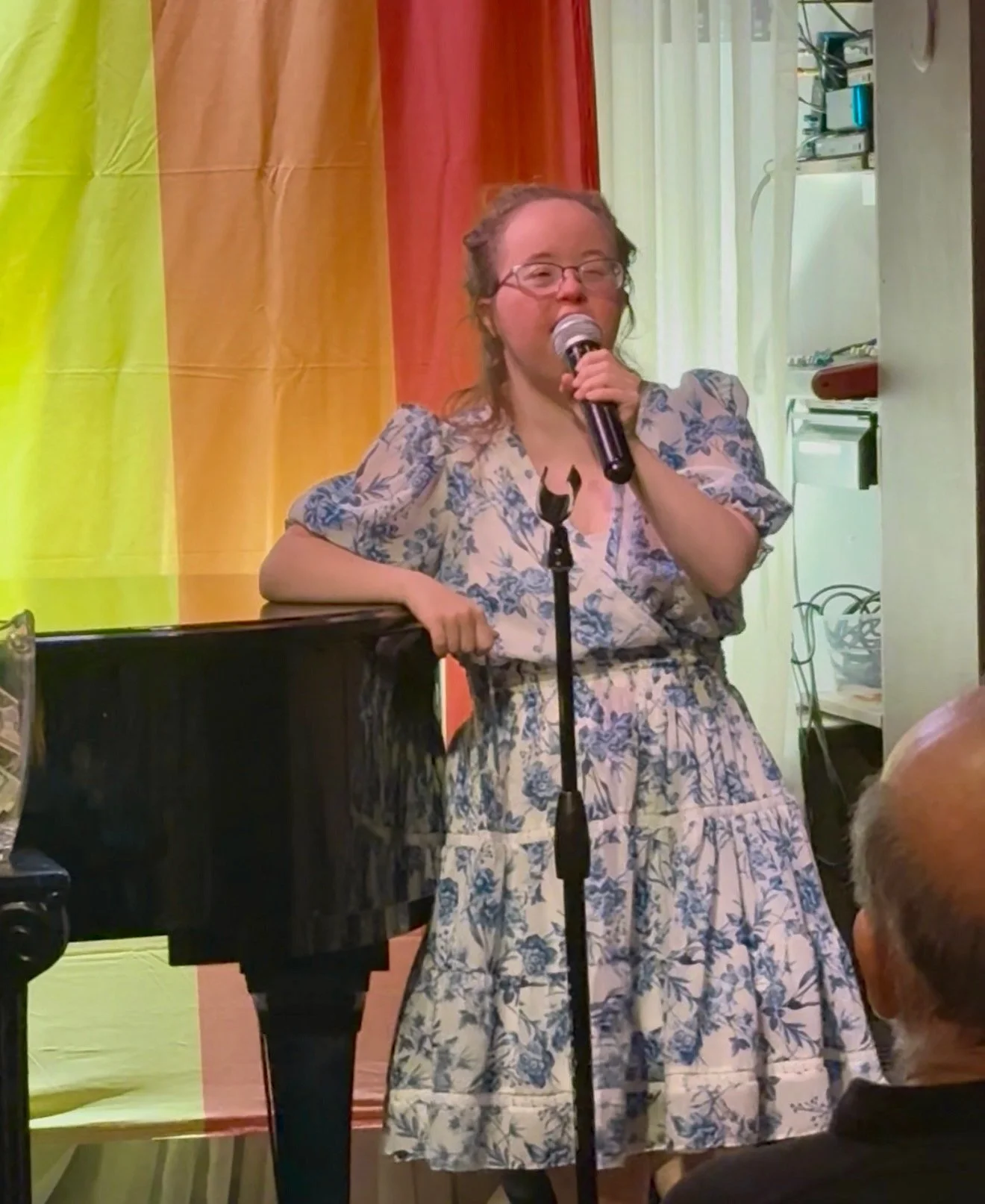
But there are so many more things that she can do. She can walk and talk and see and hear and work the remote better than I can. She’s a singer. She belts out show tunes. She quotes from movies. She’s an empath. She knows when someone needs a hug. She tries hard. And if she doesn’t get something at first, she keeps trying. She is kind and she is loving and she has people who love her. Is her life challenging? Yes, of course it is. But isn’t life challenging for all of us?
It’s a crapshoot, raising children. But what Lucy brings us every day is pride and joy because everything she does amazes us.
Parents whose kids are typical, whose children are at the top of their class, on top of the world, who grow up and away and live independent lives, many of these parents — and I was one of them — are unable to wrap their brains around the idea that a person who isn’t independent, who needs a little help, who is a little different, is complete and perfect exactly as she is.
Lucy is complete and perfect. It is we who would be incomplete without her.
